How a redesigned roommate agreement helped one residence life team improve mediation, support student development, and reduce room changes.
Are roommate agreements actually helping students navigate shared living spaces, or have they become just another task to complete during move-in?
Students complete their agreements, the forms get submitted, and everyone moves on. Then, a few weeks into the semester, roommate concerns start rolling in. When conflicts arise, how often are those initial agreements part of the conversation? The University of Evansville (UE) recognized a similar pattern. In a single academic year, the university recorded 52 room changes among approximately 1,200 residential students. Each move meant additional coordination for staff, potential financial implications, and disruption to students’ living arrangements.
UE’s residence life team decided to rethink the approach. After reviewing common roommate concerns and gathering input from RAs, the team developed a Roommate Success Plan designed to be useful beyond move-in. Following its implementation, room changes decreased from 52 to 14, a reduction of approximately 73%.
During a recent eRezLife webinar, Will McDonner, Assistant Director of Residence Life at UE, shared how the team developed the plan and incorporated it into its approach to roommate mediation.
Four changes that made a difference
Use mediation trends to inform the questions
UE started by reviewing two years of roommate mediation forms to identify recurring concerns. The team also gathered feedback from RAs, who had firsthand experience helping students navigate disagreements.
Rather than relying on questions simply because they’d always been part of the agreement, UE focused on topics that reflected the challenges students were actually experiencing. For departments considering a similar update, existing mediation records and feedback from student staff can offer a useful starting point. What issues keep coming up, and are students discussing them before they become problems?
Rethink how the agreement is introduced
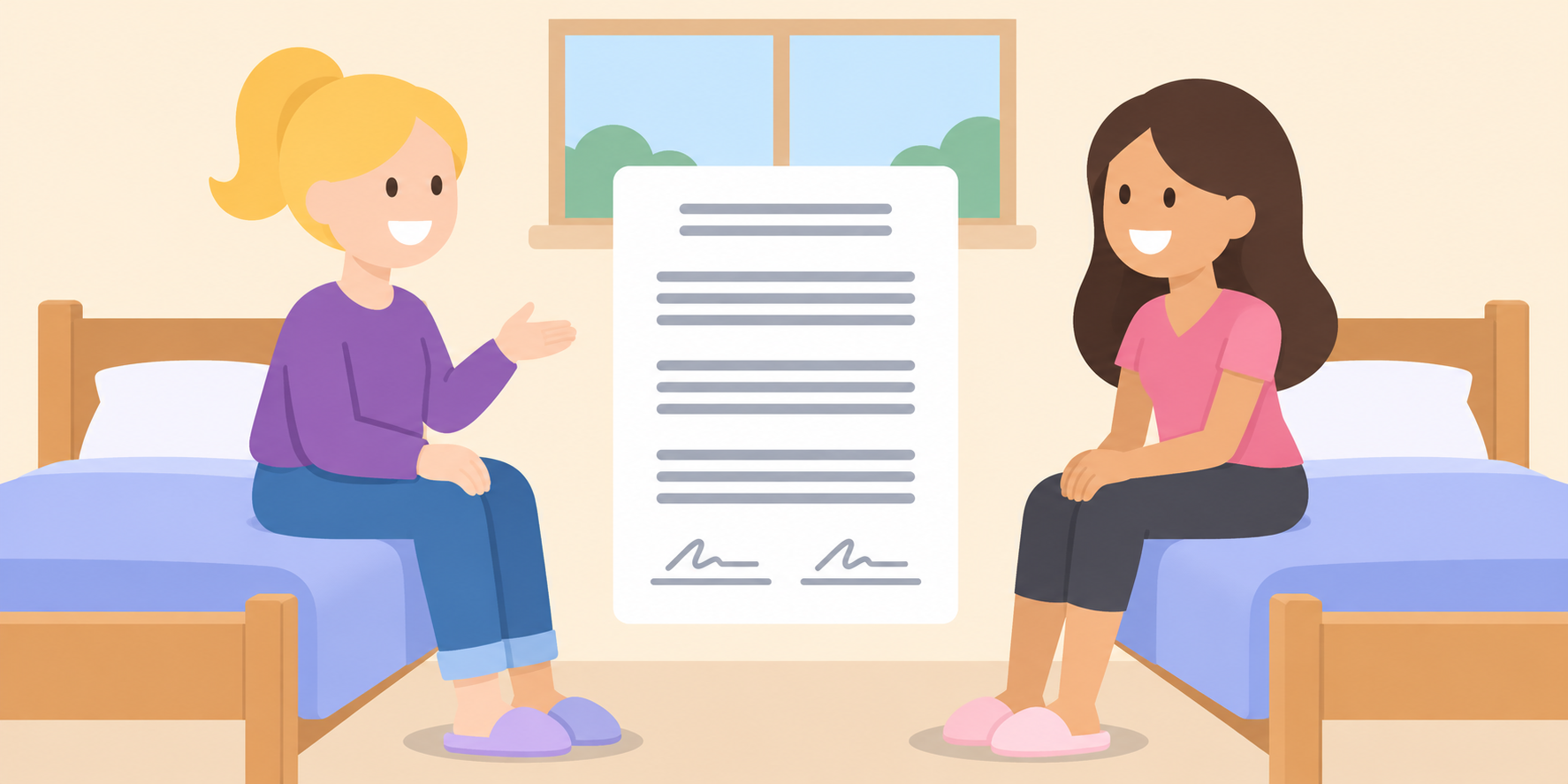
Asking new roommates to complete a formal “contract” can feel a little awkward, especially when they’ve barely had time to get to know one another. UE renamed its document the Roommate Success Plan, shifting the focus from documenting rules to helping students establish a positive living arrangement.
The team also adjusted the order of the questions. Instead of jumping into potentially uncomfortable topics, the plan begins with easier conversations before moving into expectations, boundaries, and approaches to conflict. The goal was to make the process feel less like paperwork and more like a conversation students would find useful.
Involve RAs and campus partners in the process
UE knew that updating the agreement was only part of the work. RAs also needed to feel prepared to facilitate the conversations that followed. The department involved RAs in developing the plan and partnered with its Counseling, Title IX, and Center for Inclusive Excellence offices to strengthen staff training and provide guidance for navigating difficult conversations. Bringing those perspectives together helped UE develop a more consistent approach to mediation, informed by the staff who work directly with students.
Bring the agreement back into the conversation
One of UE’s biggest changes was making the Roommate Success Plan a resource that students and staff could revisit throughout the year. Students complete their plans early in the semester, establishing expectations before significant disagreements develop. When concerns arise, RAs can return to those conversations as a starting point for mediation.
The plan also plays a role in room change requests. At UE, students are generally expected to work through mediation with their RA and building supervisor before a room change is approved, with exceptions for safety and serious health concerns.
The university’s roommate agreement guidance outlines its approach to communication and encourages students to seek support from residence life staff when they can’t resolve concerns independently. Having the plan available gives staff something concrete to reference rather than starting from scratch each time a concern comes up.
The results: From 52 room changes to 14
Following the introduction of the Roommate Success Plan, UE reported a 73% decrease in room changes, from 52 to 14.
For a department housing approximately 1,200 students, fewer moves mean less time coordinating reassignments, fewer disruptions within residential communities, and potentially fewer financial adjustments or refunds when students move out of higher-cost accommodations. The department also has a more consistent approach to mediation. RAs can use the plan to guide conversations, while professional staff can focus on situations that need additional support. Not every roommate disagreement needs to result in a move. When appropriate, helping students work through differences gives them opportunities to practice communication, compromise, and problem-solving.
Those conversations are part of the work residence life teams do every day, even if they aren’t always reflected in traditional housing metrics.
Using eRezLife to support the process
UE uses eRezLife’s Residence Life service to manage its Roommate Success Plan digitally. Through customizable forms and workflows, the department collects roommate responses and makes that information available to the appropriate staff. When roommate concerns arise, RAs and professional staff can reference the expectations students established earlier in the semester rather than tracking down paper agreements.
UE also directs students to eRezLife through its official roommate agreement webpage, connecting the digital form with the university’s guidance on communication and conflict resolution. Having those agreements accessible gives the department a consistent way to support mediation while keeping the focus on conversations between students.
Hear more from the University of Evansville
We recently hosted Will McDonner, Assistant Director of Residence Life at the University of Evansville, for our webinar, “Top Tips for More Meaningful Roommate Agreements.” Will shared how UE developed its Roommate Success Plan, what the team learned along the way, and how the department uses it to support roommate mediation.
Top Tips for More Meaningful Roommate Agreements